
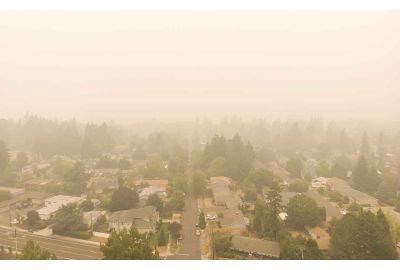
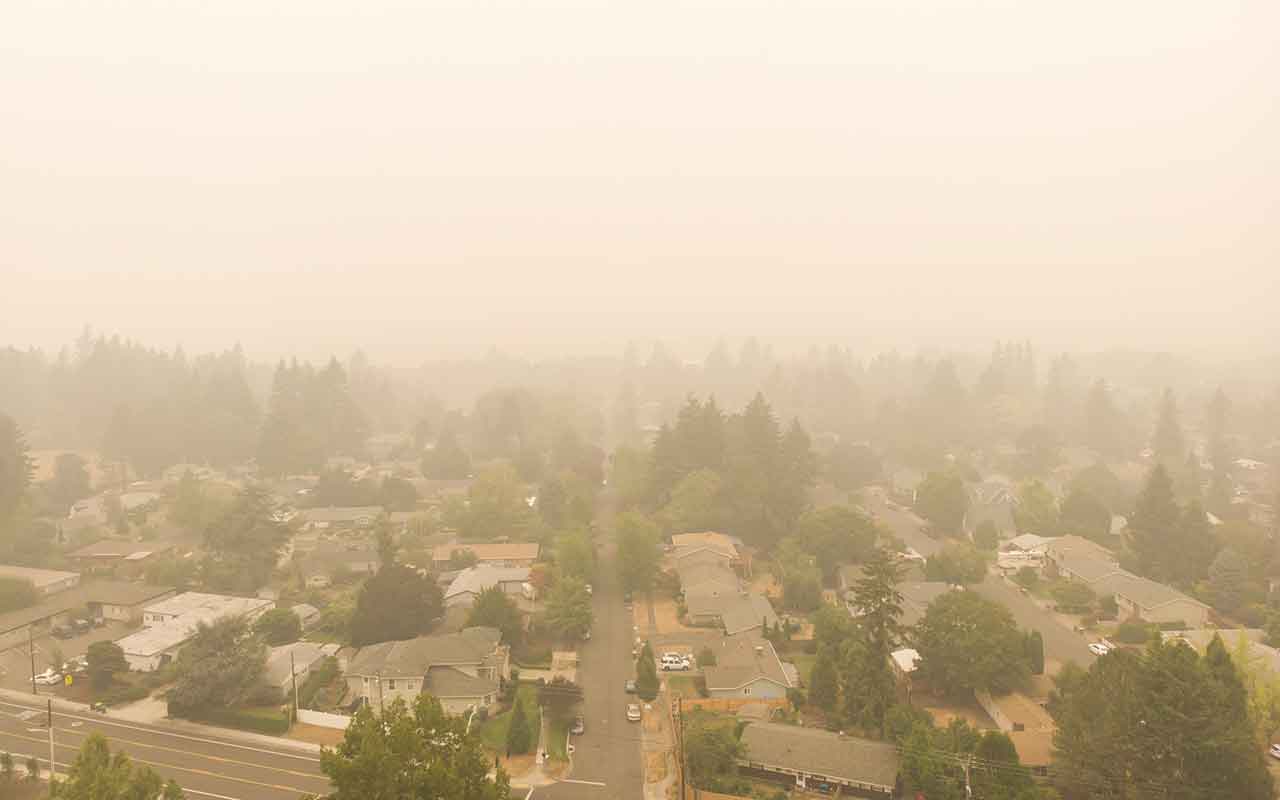
A fire burning a thousand miles north of where you live can still end up in your living room, your kitchen, your lungs. Smoke from the Canadian wildfires up north have pushed all the way south into North Carolina this month. We are seeing wildfire smoke affect the air across the country.
Fires from Minnesota are forcing thousands from their homes. Orgeon wildfires have stretched to cover 200,000 acres. Winds high in the atmosphere carry that smoke hundreds or thousands of miles. This is how, even if you don't live remotely near the area where these fires are, they can affect the air in your home.
What you may not know is that once smoke gets inside your home, it can linger for a good while. Homes tend to trap air and recirculate it over and over. This means that the fine particles that drift through the gaps and vents can build up and keep floating around your home.
Indoor air quality during a wildfire smoke event can end up being worse than what you can see. The smell and the haze can stick around, sometimes for days, after the outdoor air quality has recovered. Making it so even if the air outside has cleared up, your house is left holding on to the smoke.
The good news is you already have a tool at your disposal that can help clear up your home's air. Your home furnace or AC filter is already installed and ready to deal with this, but only if it's rated to catch that smoke. Just because you have an air filter doesn't mean you have the best air filter for fire season.
Wildfire smoke is mostly fine particulate, small enough to slip past a basic pleated filter. This particulate is so small, health officials recommend using N95 or P100 respirators if you're exposed to the smoke outdoors.
So what can you do about your home air filer? What is the best air filter for smoke from fires? What we need is a filter with a MERV rating high enough to capture that fine wildfire smoke particulate entering your home. The higher the MERV, the more particles it can filter out of your home's air.
Which MERV rating actually handles smoke?
Like we mentioned before, just because a filter has pleated media doesn't mean it can filter everything. This is specially true when we're talking about those small forest fire smoke particulate matter. What are the best air filters for forest fire smoke?
MERV 8 is what most homes run day to day. It reduces up to 75% of large airborne contaminants: pollen†, dust, lint, dust mite debris, and pet dander, the stuff that coats your furniture and clogs your system. It cleans the air well and keeps your furnace and AC running longer without choking airflow the way a heavier filter can on an older system. For smoke particle removal, though, it's not the one. The particles are too fine.
MERV 10 Carbon is the filter to reach for when the problem is smell. It reduces up to 80% of large airborne contaminants, and the activated carbon layer goes after odors, adsorbing smoke and smog instead of circulating them back through the house. If the air quality reading looks fine but your house smells like a campfire, this is what fixes it.
MERV 11 is the allergy-and-pets upgrade. It reduces up to 85% of large airborne contaminants, catching everything a MERV 8 does plus the finer particles that trigger symptoms: pet dander, fine dust, pollen† fragments, and mold spores small enough to slip past lighter filters. If your air feels dusty no matter how often you clean, or allergy season hits hard indoors, this is the step up that makes a difference with those airborne particles.
MERV 13 is the best air filter for wildfire smoke. It has the highest filtration level most homes will ever need, and it reduces up to 91% of large airborne contaminants including smoke, smog, mold spores and VOCs. This is the best filter for fire smoke and for when there's wildfire haze in the forecast. Shop MERV 13 Air Filters.
Getting more out of the air filter you have
Once you have the right filter with the right rating for removing wildfire smoke, you need to do one more thing. The filter only cleans air that passes through it, and here's a setting most people never touch.
Your air conditioning thermostat has a fan mode, usually set to AUTO, which means the fan only runs when the system is actively heating or cooling. Switch it to ON during a smoke event and the fan runs continuously, pulling your home's air through the filter far more often. More passes through the filter, more particles caught. It's the single easiest change you can make when the air outside turns.
Smoke also loads a filter fast. A stretch of heavy smoke can clog a filter well ahead of its normal schedule, and a clogged filter both works worse and strains your system. After a heavy smoke run during wildfire season, swap the filter even if the calendar says it isn't due yet. What it pulled out of the air is exactly what you don't want sitting in the airflow path any longer.
Treat clean air like storm prep
You keep flashlights for outages and check the forecast before a cold snap. Smoke season has earned the same spot on the list. Fire seasons are running longer and the smoke is traveling farther, which means the odd size or the MERV 13 you meant to order is worth having on the shelf before the air quality alert, not during it. The households that come through a smoke week comfortable are the ones that stocked the right filter early and flipped the fan to ON when the haze rolled in.
Find your size, keep a spare, and you're ready before the next one.
Wildfire smoke and air filters: common questions
What MERV rating is best for wildfire smoke?
MERV 13. Wildfire smoke is made mostly of fine particulate, and MERV 13 reduces up to 91% of large airborne contaminants, including smoke, smog, and particles that carry viruses. It's the highest filtration most homes will ever need. If your system is older and you're worried about airflow, MERV 11 is a solid step down that still catches far more than a basic filter.
Will a regular furnace filter help with smoke?
A standard MERV 8 filter handles everyday dust and pollen, but it isn't built for smoke, the particles are too fine to catch reliably. It's better than nothing during a smoke event, but if you know smoke season is coming, moving up to MERV 11 or MERV 13 is the change that actually clears the air.
How often should I change my filter during fire season?
More often than usual. Heavy smoke loads a filter fast, so check it every couple of weeks during a smoke stretch instead of waiting for your normal schedule. If it looks gray or airflow feels weak, replace it, even if it isn't technically due.
Does a carbon filter help with smoke smell?
Yes. The Accumulair MERV 10 Carbon filter uses an activated carbon layer that adsorbs odors, smoke, and smog instead of recirculating them. If your air quality reads fine but the house still smells like a campfire, that's the filter for the job.
Can I run my AC during a wildfire smoke event?
Yes, and you should, with the fan set to ON rather than AUTO. That runs the fan continuously and pulls your home's air through the filter far more often, which is exactly what you want when smoke is in the air. Just keep windows and outdoor-air intakes closed.


